Be yourself; Everyone else is already taken.
— Oscar Wilde.
This is the first post on my new blog. I’m just getting this new blog going, so stay tuned for more. Subscribe below to get notified when I post new updates.
Be yourself; Everyone else is already taken.
— Oscar Wilde.
This is the first post on my new blog. I’m just getting this new blog going, so stay tuned for more. Subscribe below to get notified when I post new updates.
Internet memes may be particularly relevant to such boundary work, as they are, in many cases, public in nature. Choosing to post a particular meme version in a particular digital arena co-constructs individuals and collectives. Internet memes-combining pictures, videos, hashtags, and texts, often from different environments, adapted and redesigned in a way to fit an identity (e.g., Hentges, 2018). Online memes can be dessiminated by liking, commenting, and sharing. Ergo, they flow from person to person, for instance, through copying or imitation.
Memes can be defined as “an information pattern, held in an individual’s memory, which is capable of being copied to another individual’s memory” (Downes, 1999). It is also defined as “an idea considered as a replicator, with the connotation that memes parasitise people into propagating them as viruses do” (Downes, 1999).
Memes that criticise how the society works or the political state of a country often subtly affect the way people think about subjects without being offensive or aggressive. Numerous kinds of mediums like newspapers, television and social media utilise memes in order to express and spread ideas and perspectives from one culture to another.
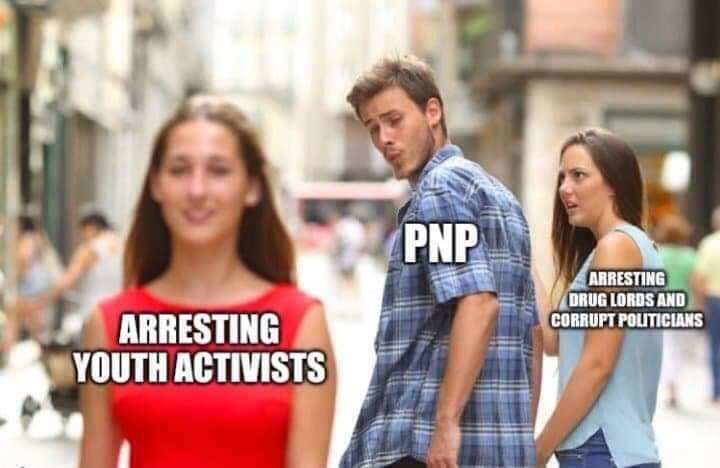
The meme depicts how PNP, that is supposed to be a unit for justice and safety-keeping, takes interest in silencing youth activists than arresting drug lords and corrupt politicians. This meme also wants to inform that a rally can make a change on what is happening and useful to express their stands on what is right, therefore, it is not a thing that should be silenced. People who liked and reposted this meme share the same collective identity with those people who make sense with what the meme wants to tell and those who knew our history and the importance of rally.
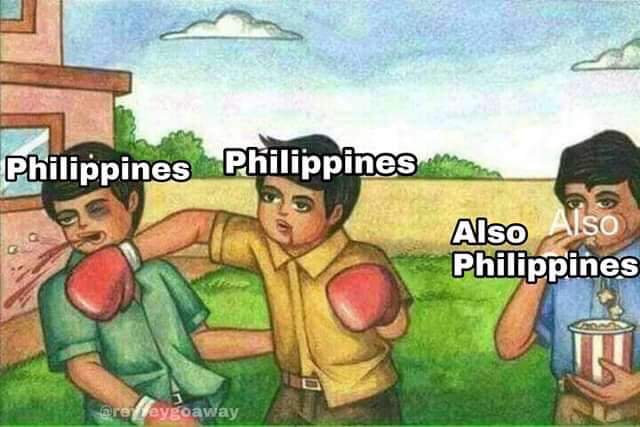
Showcases the Filipino characteristic of wanting to kill each other off for the reason that is usually about power and superiority.
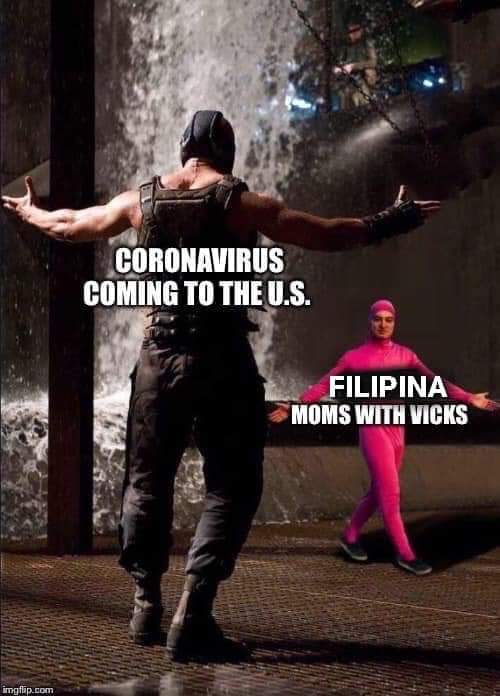
Depicts the most effective, all-around, medicine for Filipino mothers. They believe it can heal almost every diseases, they might believe it is effective for combating the Novel Corona virus.
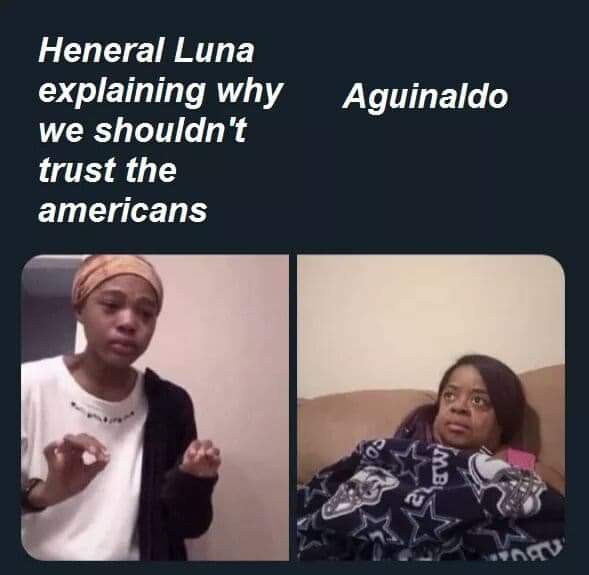
This meme depicts the struggle of Heneral Luna convincing then President Aguinaldo that Americans are not trustworthy, but Aguinaldo did not give him any heed thus submitting our country to a whole lot years of colonization. This meme also wants to remind the audiences about something that happened in the past in a funny but witty way. People who made this meme position themselves as people who are knowledgeable about Philippine history and issues. This meme has also a funny scene from a short video in order to catch the attention of a large group of people and to appreciate it at the same time.
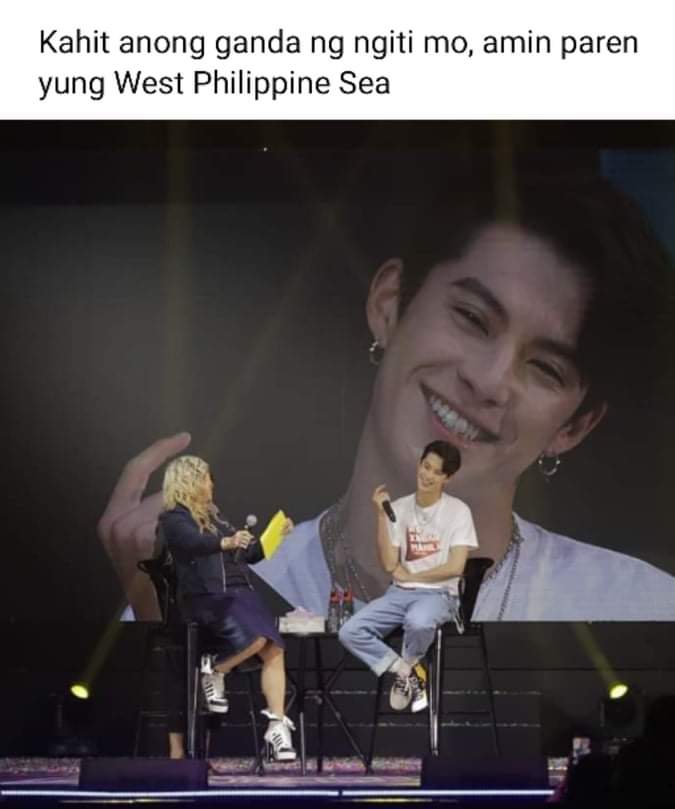
This particular meme shows the nationalism of Filipino fan girls still being above their undying support and love for the chinese actor. The identity which this meme is trying to tell is for those who find the notion of this meme as laughable and entertainment specifically those who can really relate with this. The happy culture of Filipinos can also be observed where Filipinos tend to posses optimism despite of serious situation.
The people who were behind these posts wanted to remind their audiences about something that is still evident and is still an issue in the country up until now. It is also a mixed of politics in a witty manner. They also wanted to get the attention and sympathy of many audiences by using a famous scene from movies and such. People who created and reacted to these memes are those who were aware of what issues and happenings surround our society. Moreover, the social representation for those people who understand what the memes want to tell are Filipino cultures and sharing the same collective identity of being Filipinos.

Since human beings came into existence, we have developed communication to interact with one another. Communication is gradually shifting from one phase to another from orality to literacy and traditional media to convergent media. Due to the advancement of technology, different kinds of traditional media merged to form convergent media.
The beginning of human communication dates back to ancient orality. All languages have their origins in primary orality, however, only a portion of all existing languages had been written down. Later on, orality progressed into literacy when words became technologized. This also led to the introduction of the printing press which disseminates information through magazines, newspaper, flyers, tabloids and the likes.
The rise of the World Wide Web allowed people to engage in a bigger society. It enables them to connect with the world giving them the chance to know the differences among societies and cultures, that might alter their perspectives. Internet is also a convenient way to access and share information with the help of devices, anytime and anywhere.
Due to the unpreventable innovation of technology, it is not impossible for the ways of media to be even more convenient. It will elevate people’s standard of living. Probably, we can access information by just simply thinking, the telekinesis type of skill. However, this convenience might also result to a lot of misleading information due to the fact that filtering them is difficult. Additionally, it will cause dependency among people wherein even decision-making is media dependent. Basically, it is just everything that is happening right now but 50 times worse.
Overall, media is a powerful tool especially when used appropriately. They give us almost everything we need. Thus, we should use it smartly and ethically to live a harmonious life.

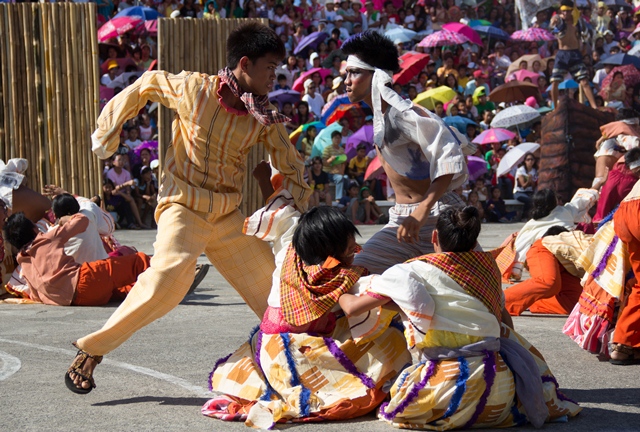
Oral cultures are used to transmit, receive and preserve knowledge, cultural and social values and collective memory by means of storytelling. Art, ideas and cultural materials are passed on by words of mouth which often vary significantly. Oral cultures often form an important part in festivities, since these events may need to be promoted. Tribal dance drama festivals encouraged traditional creativity as means of expression. Let’s take for example the annual celebration of Bantayan Festival in the small town of Guimbal wherein the re-enactment of the triumphant struggle of the natives of Guimbal against the Moros of Jolo and Maguindanao is shown every April. Ergo, the younger generations of Guimbalon will know how their ancestors generously shed their blood for the noble cause. The Bantayan Festival is one of the ways Guimbalon keep their culture alive.
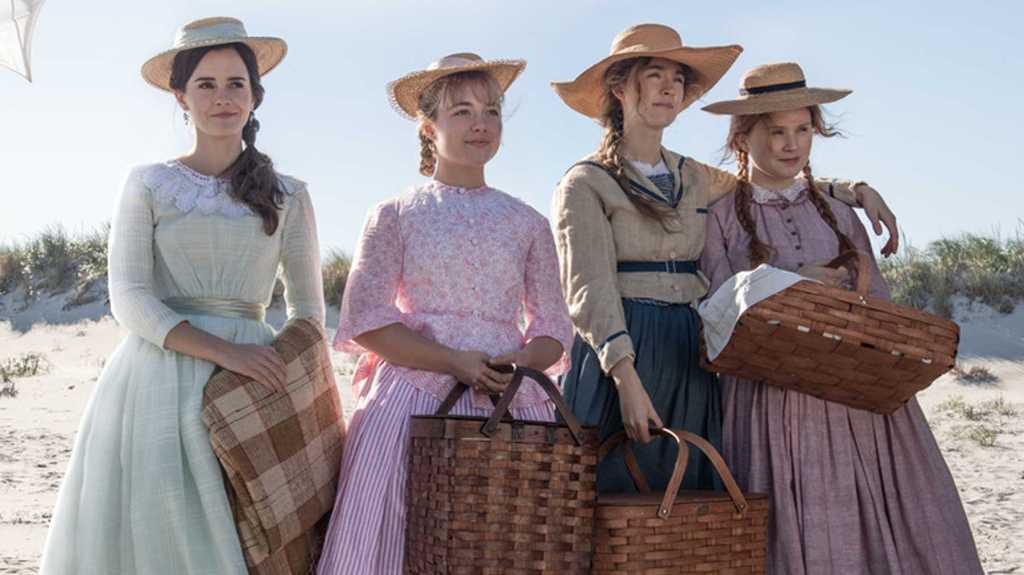
As we began to have the tools and learned to draw and write, this led to the age of literacy which opened worlds not possible with writing. In the same way, literacy is essential to society because it serves as a tool for people to discover other cultures and learn their values. An example is a case study of the Penan of Brunei who are amongst the last of the world’s hunter-gathers. Even so, their care for their forest environment is perceived as responsible and they moderately use forests for the sake of the future generations. What’s more, through written literature, people can deepen their knowledge and understanding of historical events that changed the world. Reading a literary text brings you back in time and you can step into the experiences of the characters. Louisa May Alcott’s book ‘Little Women’ allows its readers have a look into the women of the nineteenth century and how the March’s girls faced conflicts as they journeyed from being children to adults.
The notion that literate culture is above oral culture never crossed my mind, nor do they have differences. I am a person who prefers to write than to speak in public because I have no confidence in doing such. Also, writing makes me expand my ideas more and explore my thoughts well. One of my experiences was joining poem and journalistic writing, particularly in Filipino, during elementary and high school. It is true that when you write, you must be particular with grammar and there’s a structure to follow to make a good piece. I can’t say that I am really a good writer back then but, I find writing really amazing and enjoyable. It also made me realize that writing is powerful when I became one of the staffs in our publication at school, in a sense that it’s not just about constructing ideas in written form but also being socially aware and responsive of what is happening around us, and to connect with other people by disseminating factual information and share educated opinions on certain issues.

Perhaps, it is due to my personal dilemma of not having enough confidence towards my writing and speaking skills, hence I do not allow myself to judge nor to belittle neither of the aforementioned cultures; however, I am actually leaning more to the fact that I am acquainted to unbiased writers and speakers. A friend of mine who is really good at writing and is very particular of grammar, never mentioned anything about oral culture, or to put it in a relatable context, good speakers being inferior to writers. In fact, she finds them fascinating and simply amazing. She admits speaking in front, facing a huge crowd is the kind of horror she would never want to experience nor feel. Likewise, a friend who is a great speaker, does not undermine writers. He acknowledges how writing is a great medium for some to communicate, just as speaking is to him.

Overall, no matter how one would make it seem like literate culture is of greater importance than that of oral culture, which might be true for some aspects, at the end of the day, we should know that one cannot progress in the absence of the other.
This is an example post, originally published as part of Blogging University. Enroll in one of our ten programs, and start your blog right.
You’re going to publish a post today. Don’t worry about how your blog looks. Don’t worry if you haven’t given it a name yet, or you’re feeling overwhelmed. Just click the “New Post” button, and tell us why you’re here.
Why do this?
The post can be short or long, a personal intro to your life or a bloggy mission statement, a manifesto for the future or a simple outline of your the types of things you hope to publish.
To help you get started, here are a few questions:
You’re not locked into any of this; one of the wonderful things about blogs is how they constantly evolve as we learn, grow, and interact with one another — but it’s good to know where and why you started, and articulating your goals may just give you a few other post ideas.
Can’t think how to get started? Just write the first thing that pops into your head. Anne Lamott, author of a book on writing we love, says that you need to give yourself permission to write a “crappy first draft”. Anne makes a great point — just start writing, and worry about editing it later.
When you’re ready to publish, give your post three to five tags that describe your blog’s focus — writing, photography, fiction, parenting, food, cars, movies, sports, whatever. These tags will help others who care about your topics find you in the Reader. Make sure one of the tags is “zerotohero,” so other new bloggers can find you, too.

 Blackpen Writes